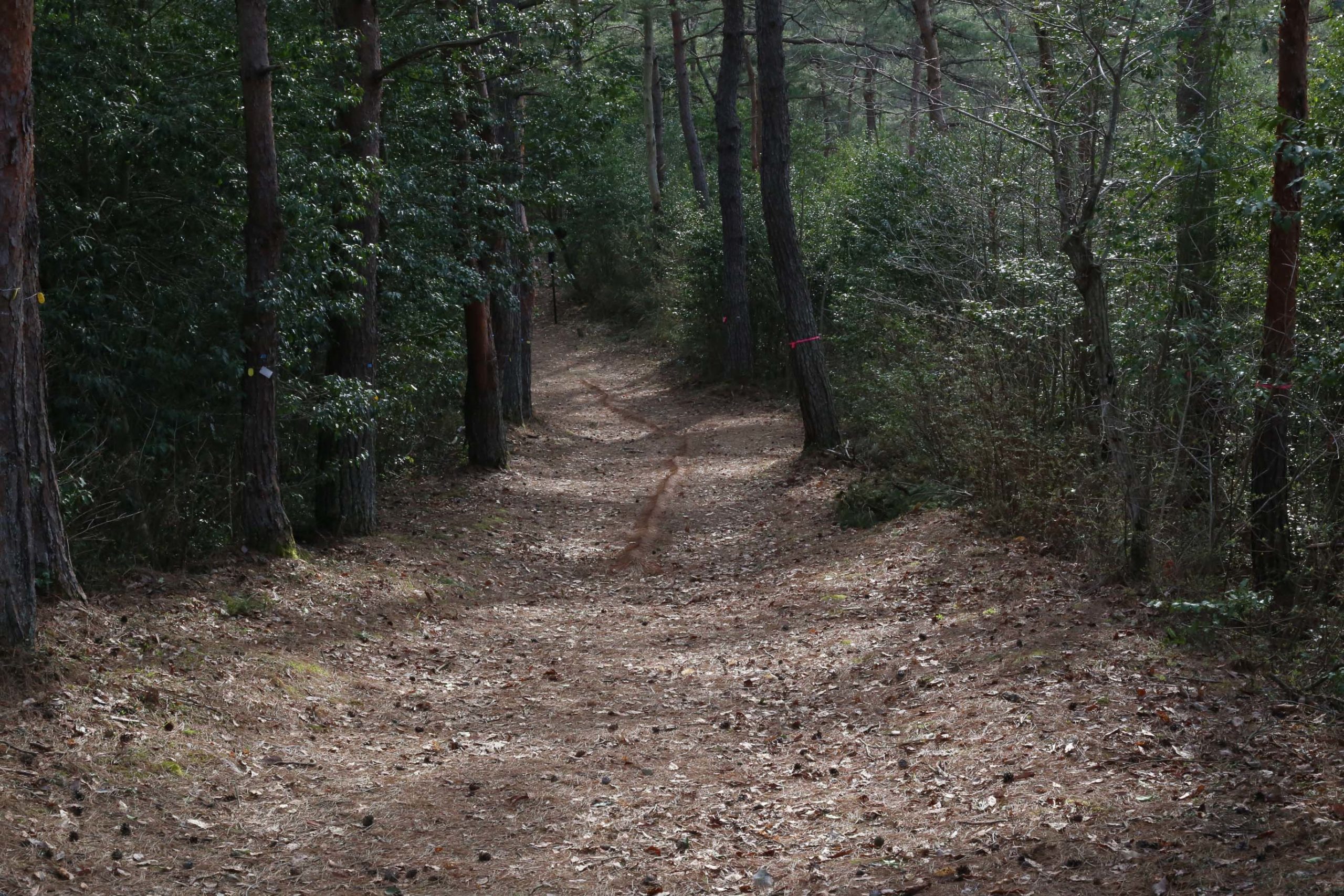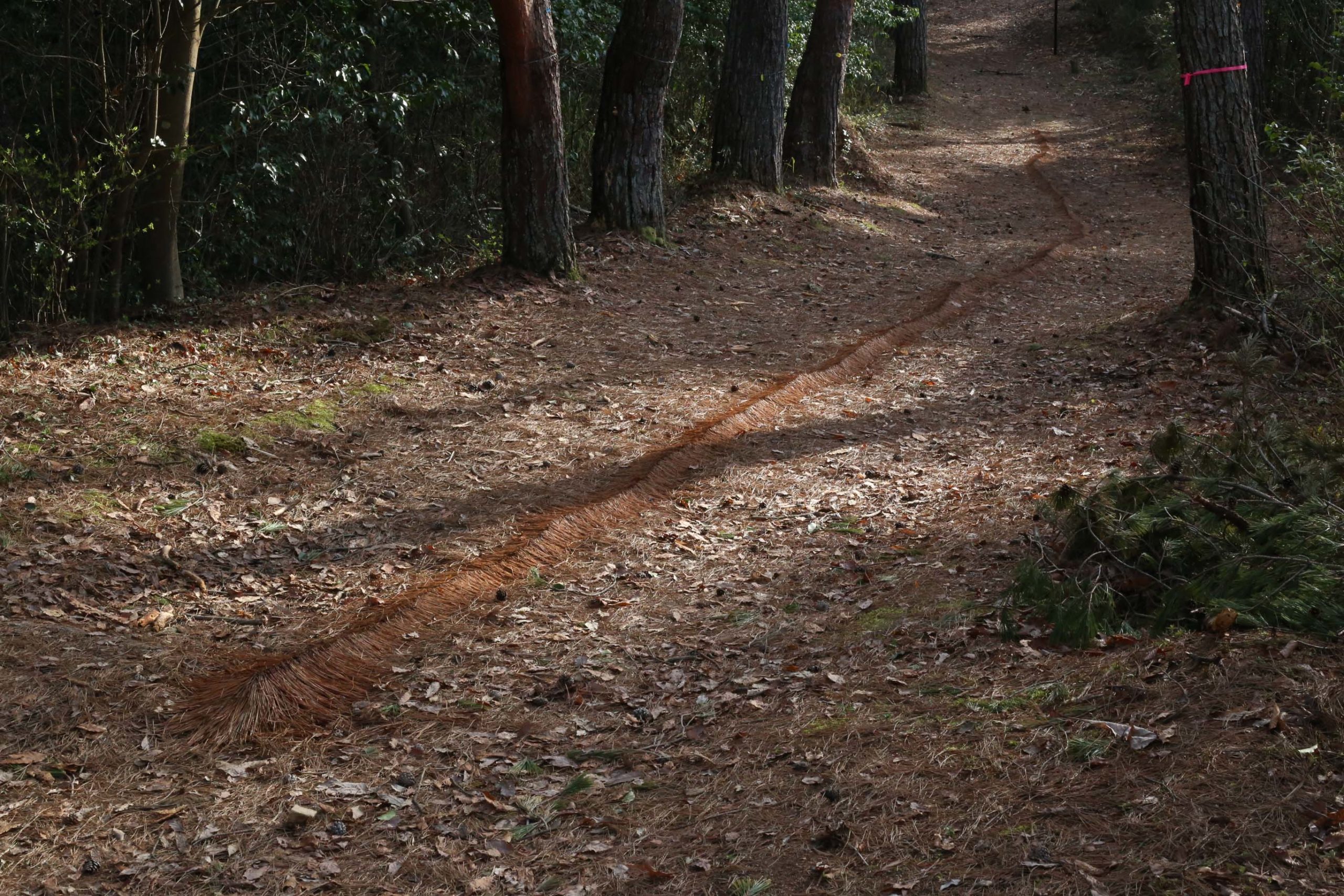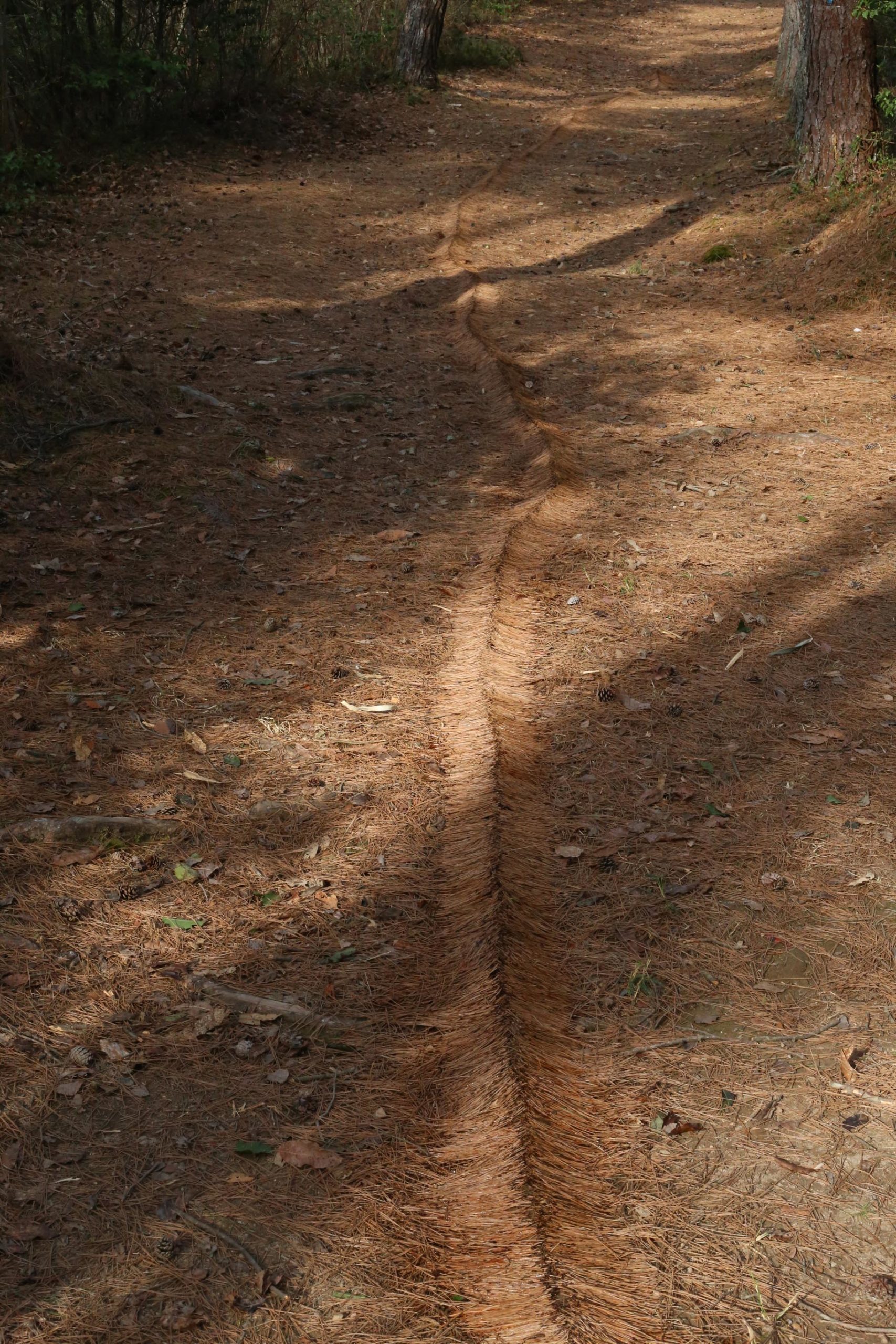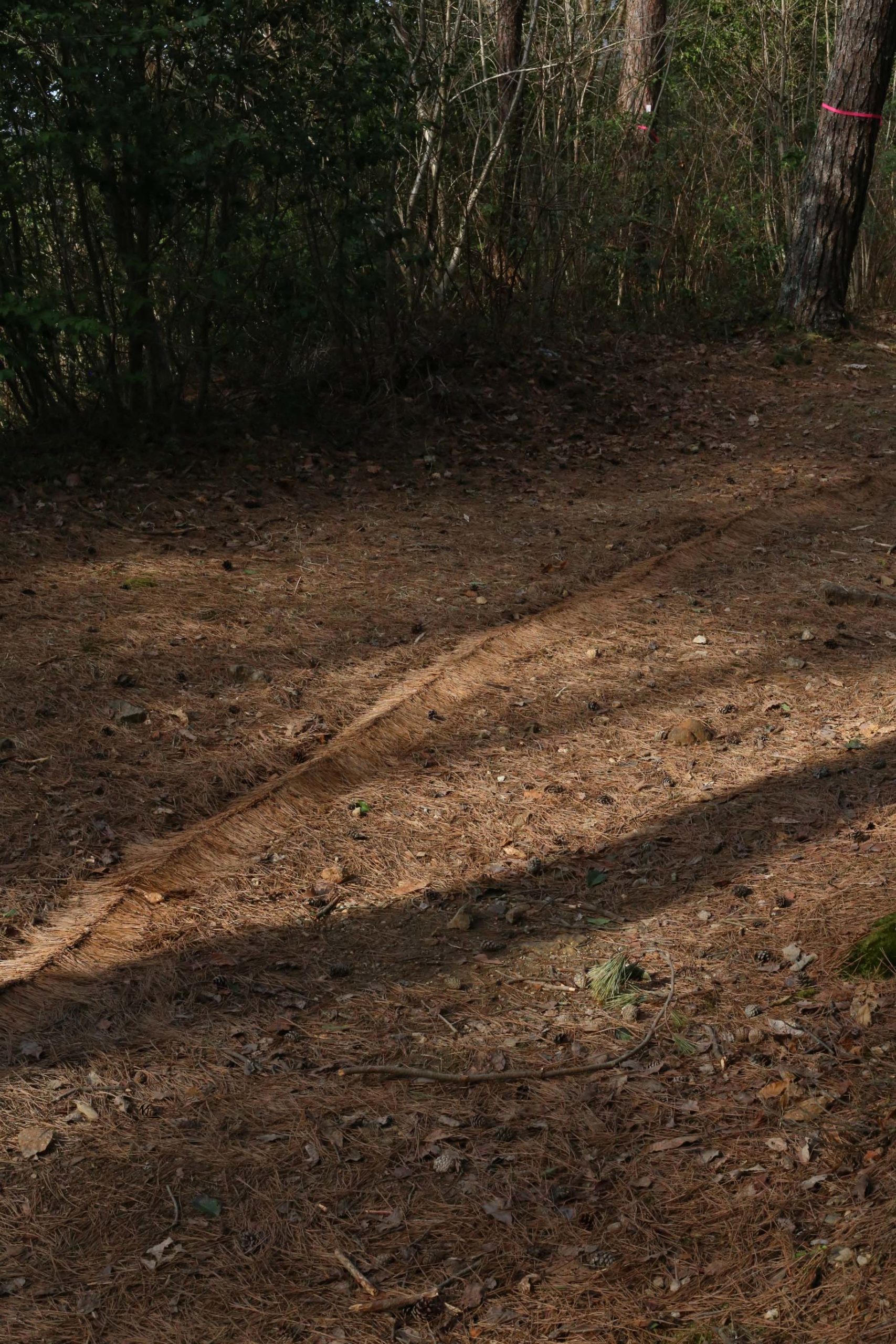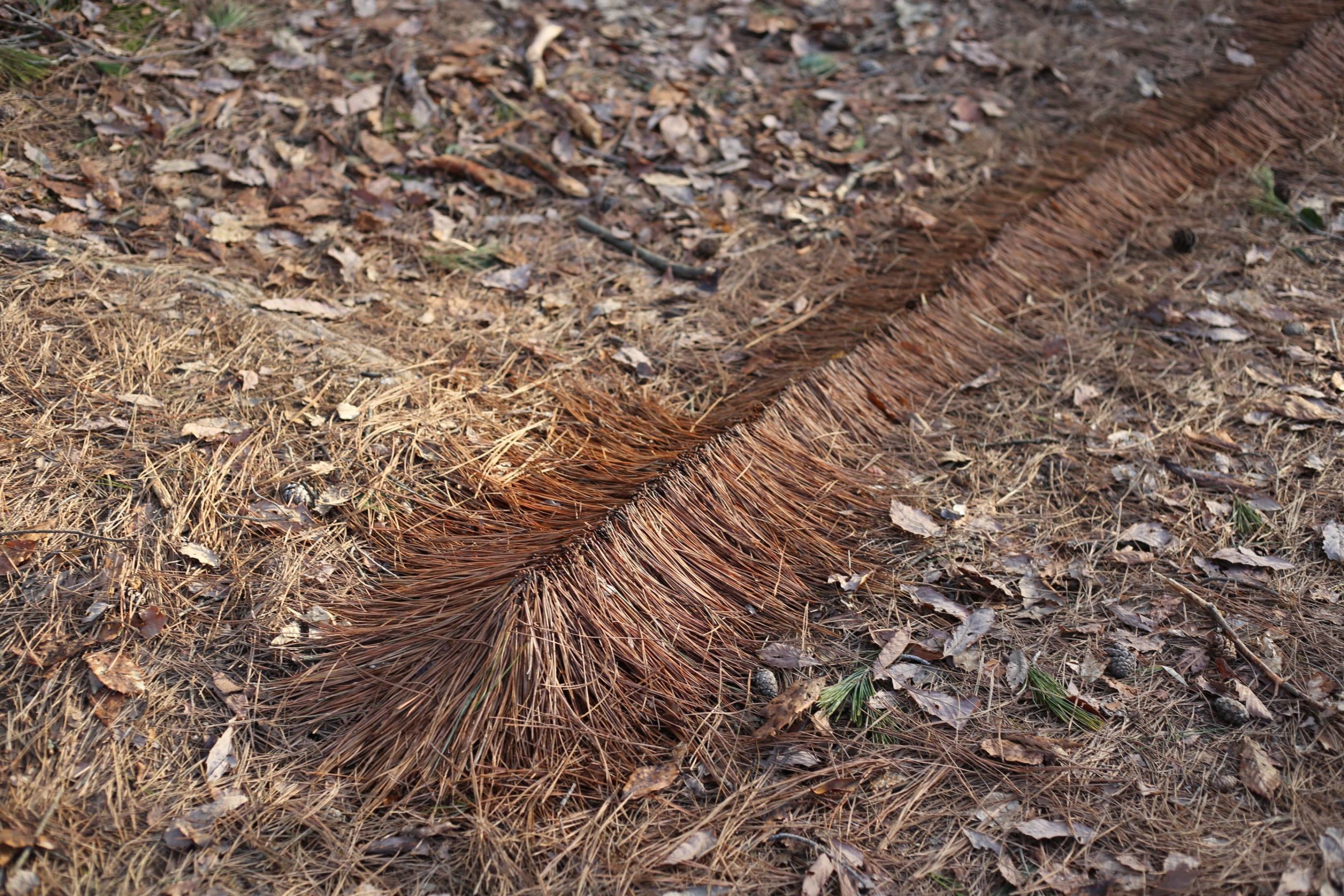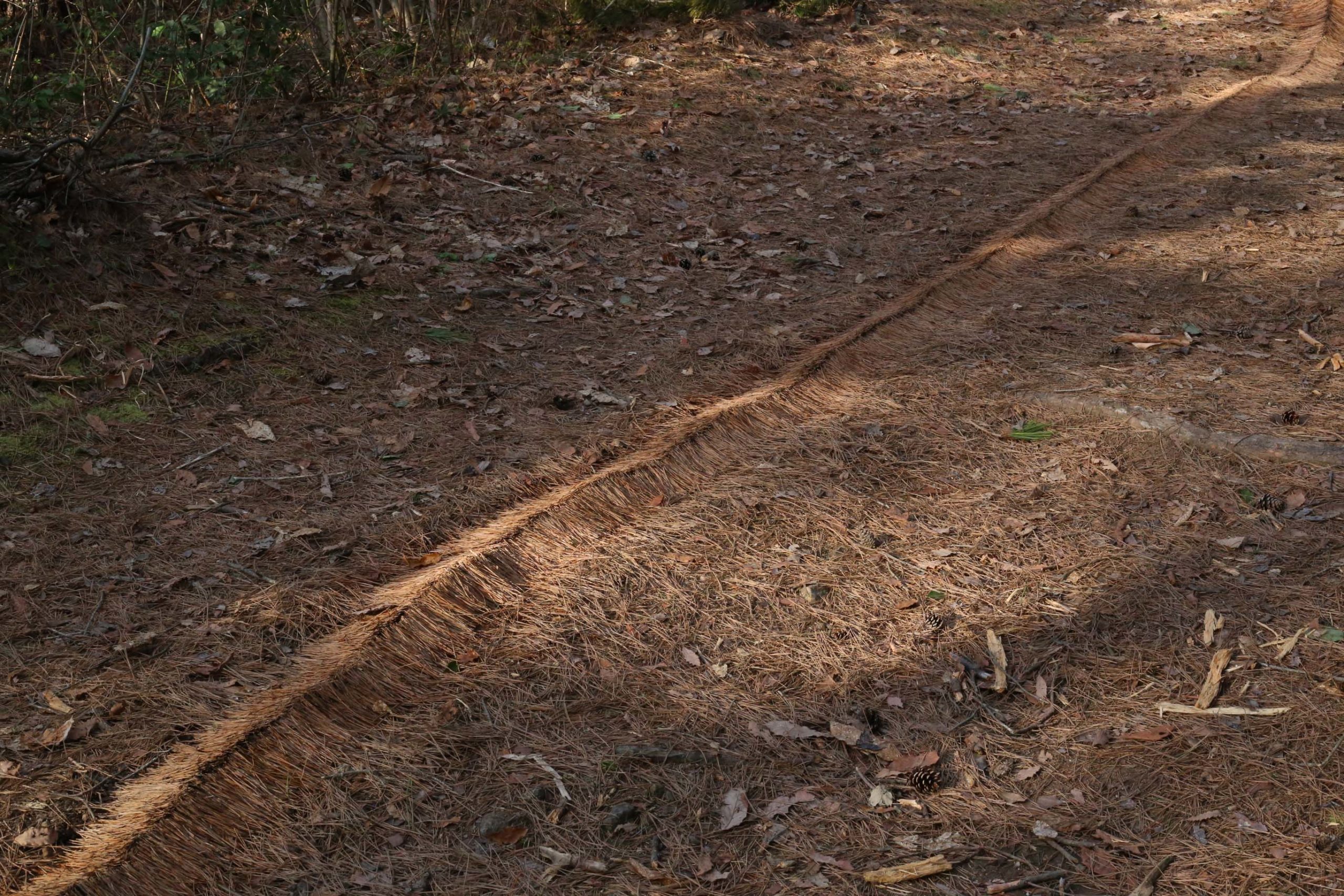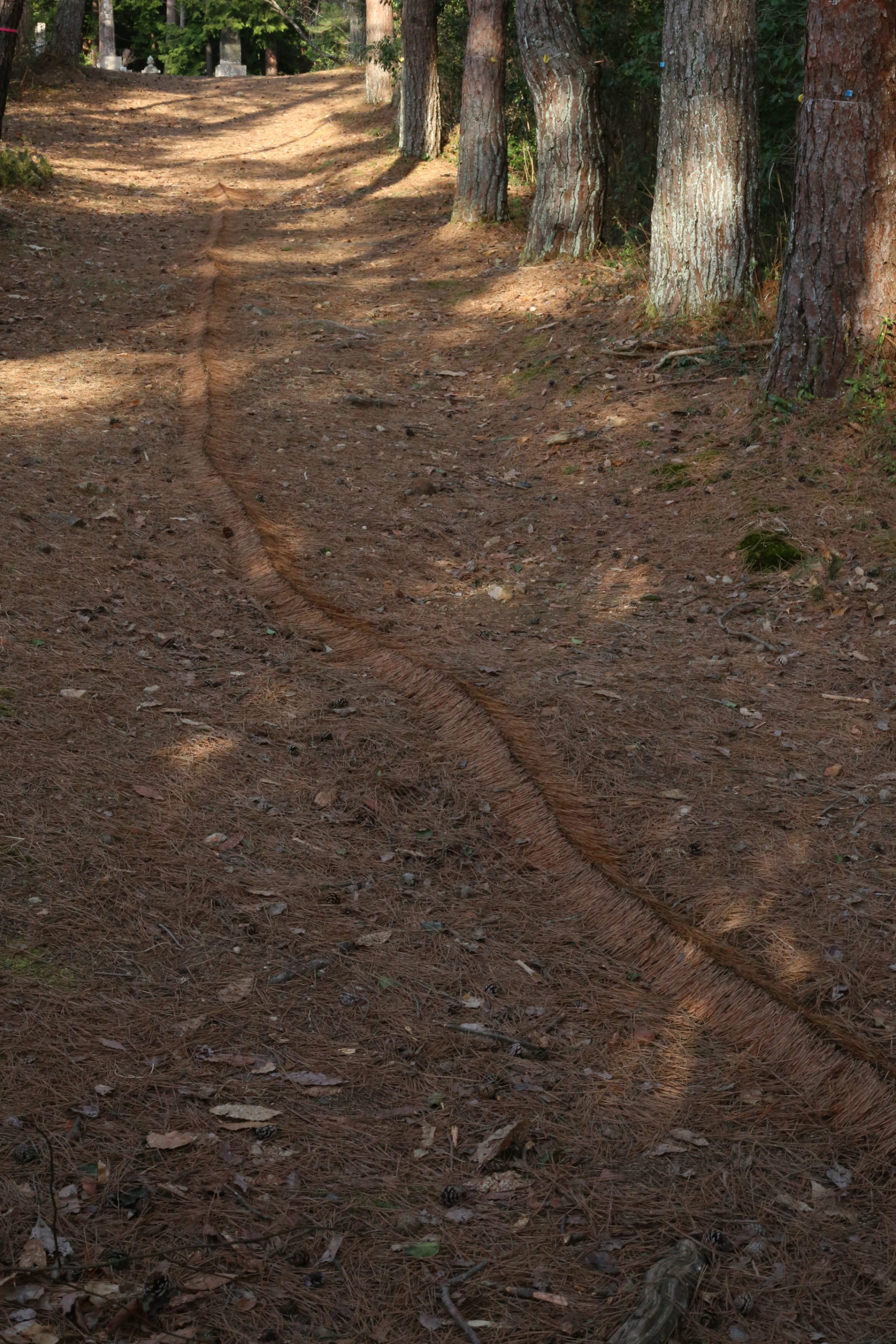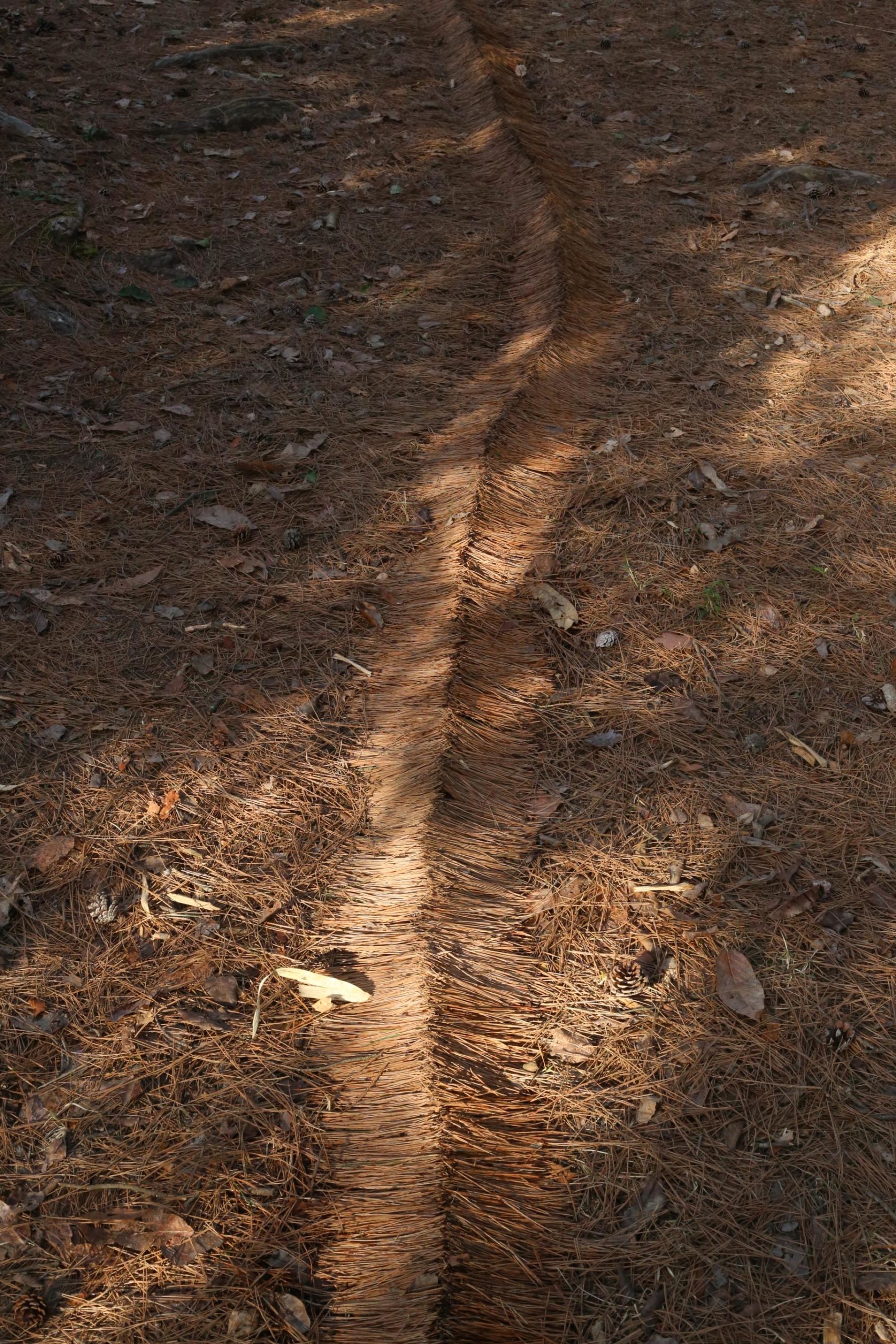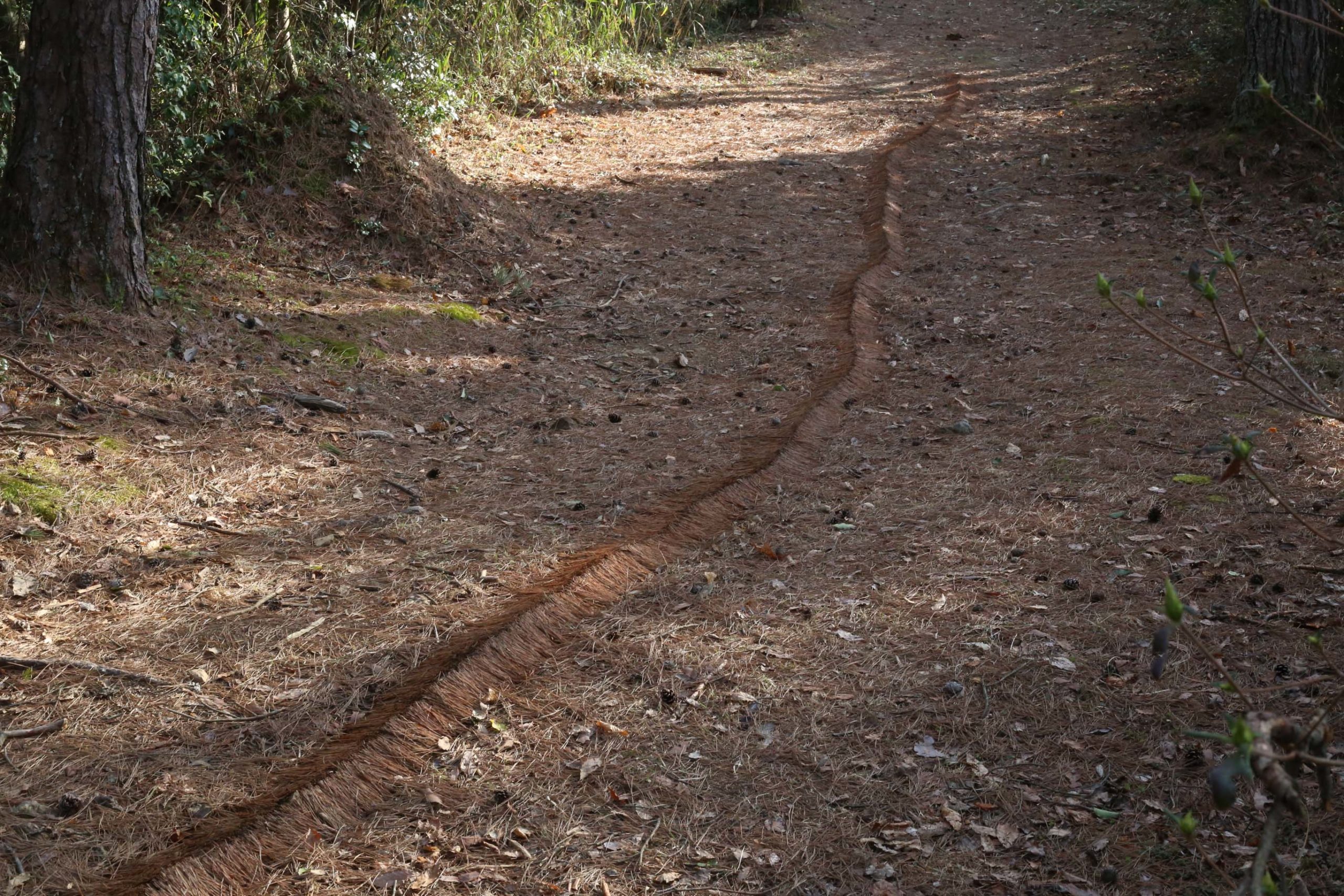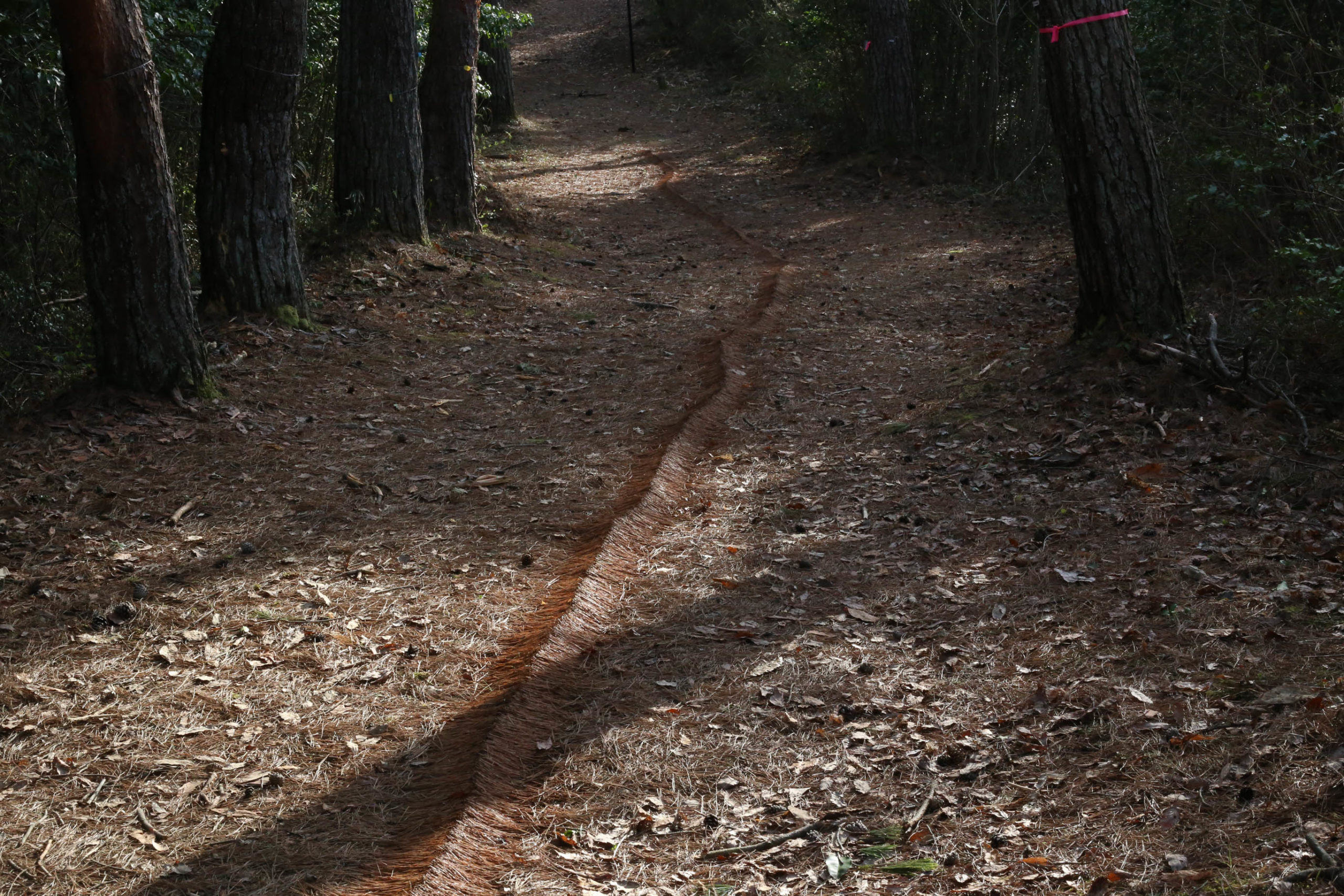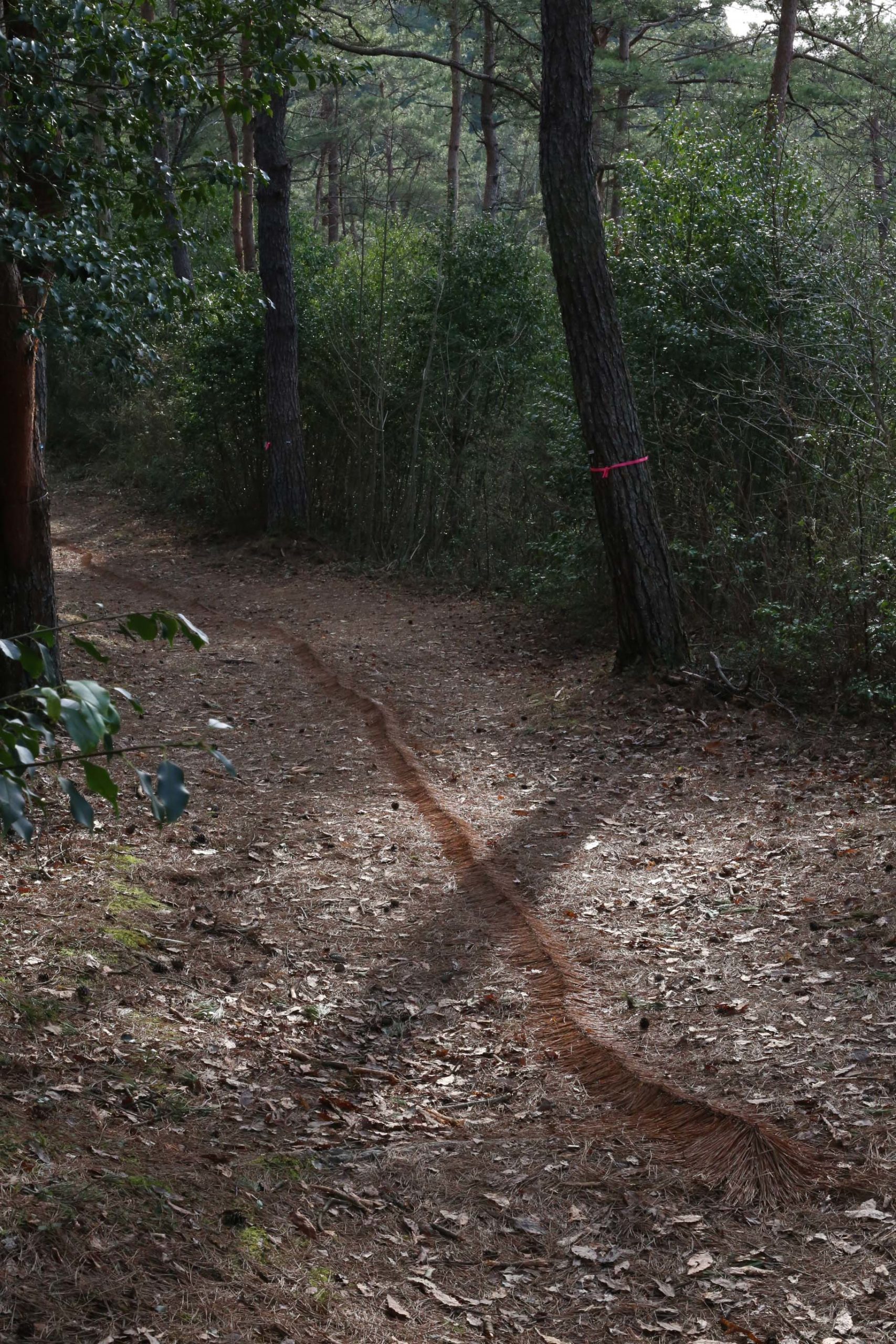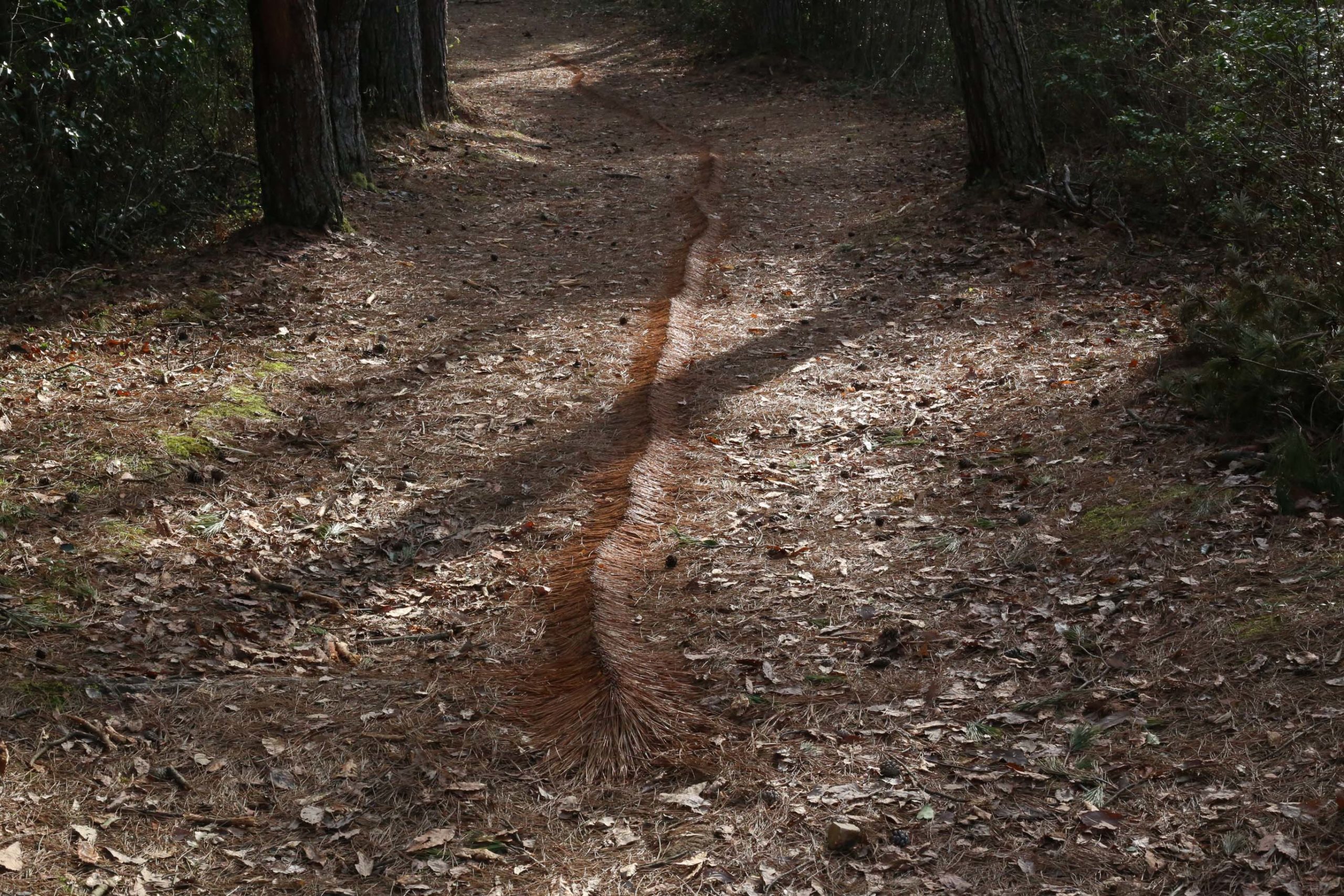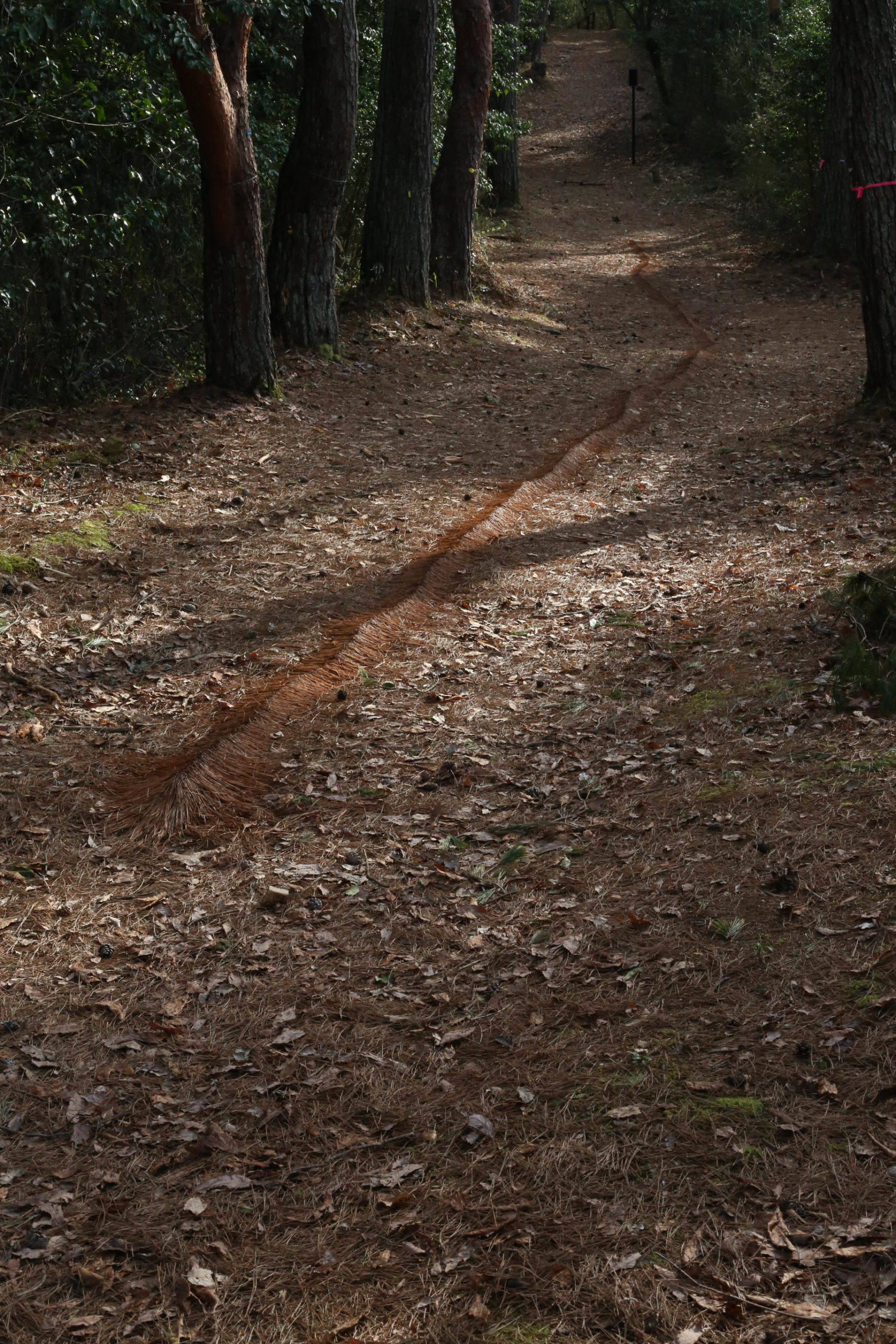
毎年4月に京丹波・わち山野草の森で行われる「森の展示室」にて制作した屋外作品です。山野草の森の敷地内に天蓋山という山があり、尾根道のアカマツ林を展示場所に選び、現地に滞在しながら制作しました。
天蓋山には、アカマツが群生しており、左右に落ち込む尾根のような地形の遊歩道を、緩やかに歩くと頂上に辿り着きます。歩きながら足元を眺めると落葉した松葉が、地面にパターンを作っていることに気がつきました。
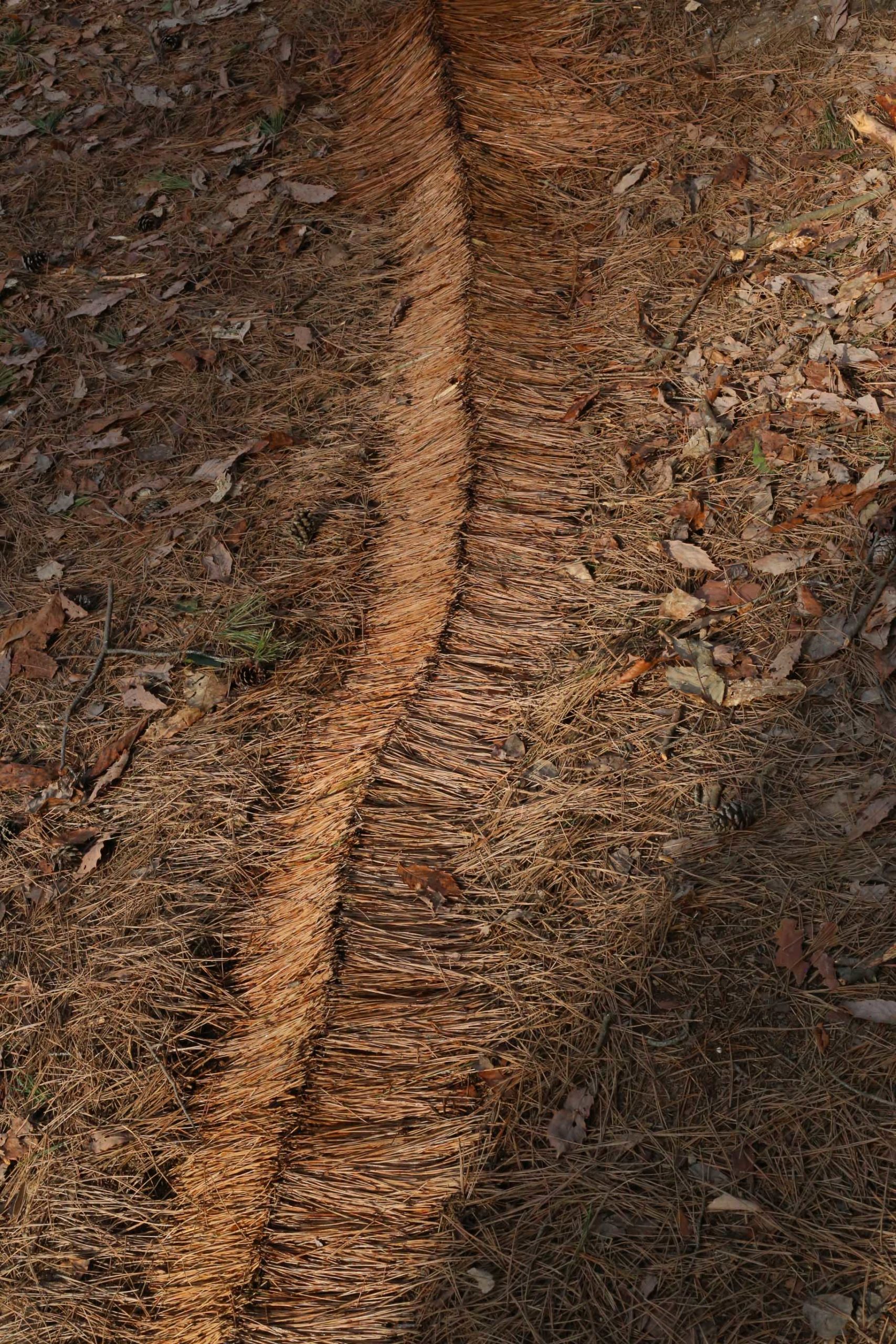
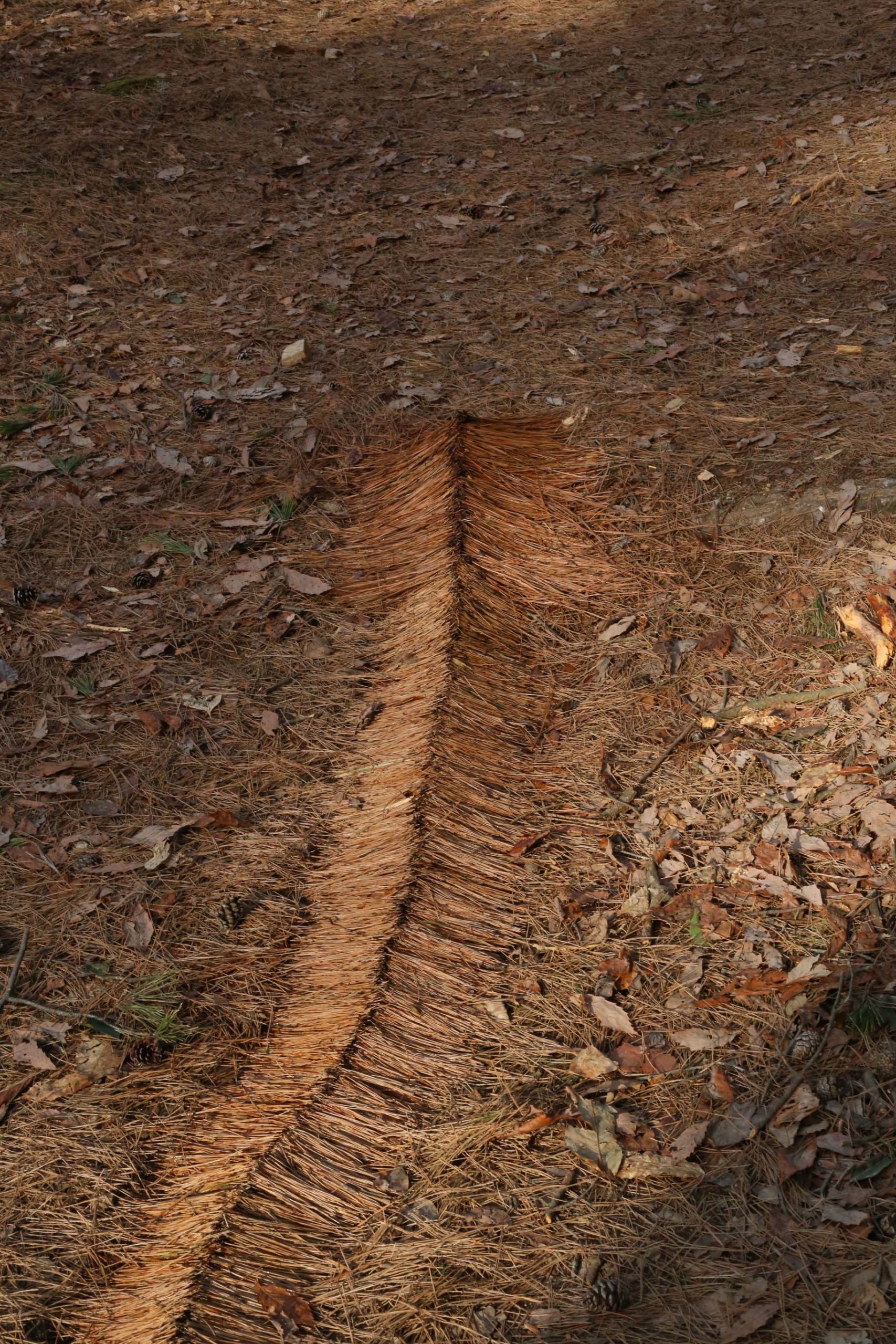
歩道部分が削られて凹んでいるため、雨水が溜まり、落葉した松葉が水によってかき混ぜられ、葉の向きが自然に揃うようでした。
人の足跡と地形が織りなすその景色が制作の発端になりました。
This outdoor work was created for Forest Exhibition Room, held at Wachi Wild Plant Garden in Kyotanba, Kyoto. I chose a site within Tengai Mountain—specifically a stand of Japanese red pine along the ridgeline trail—and produced the piece while staying on location.
Tengai Mountain is characterized by dense red pine growth and a ridge path that gradually leads to the summit. While walking the trail, I noticed that fallen pine needles naturally formed patterns on the ground. Because the footpath is slightly sunken from use, rainwater collects in these depressions, mixing the fallen needles and causing them to align in a consistent direction.
This interplay between human footsteps and the terrain became the starting point for the work. By excavating and mounding the soil of the trail, then arranging pine needles on top, the subtle patterns and gaps between the needles emerged more clearly.
The intention was to create a slight disruption within the landscape—an intervention that brings attention to what is already present yet often overlooked.
Exhibition | April 2-3, 2022
森の展示室, Kyoto, Japan
Material | Japanese red pine, loblolly pine
Length | about 30m